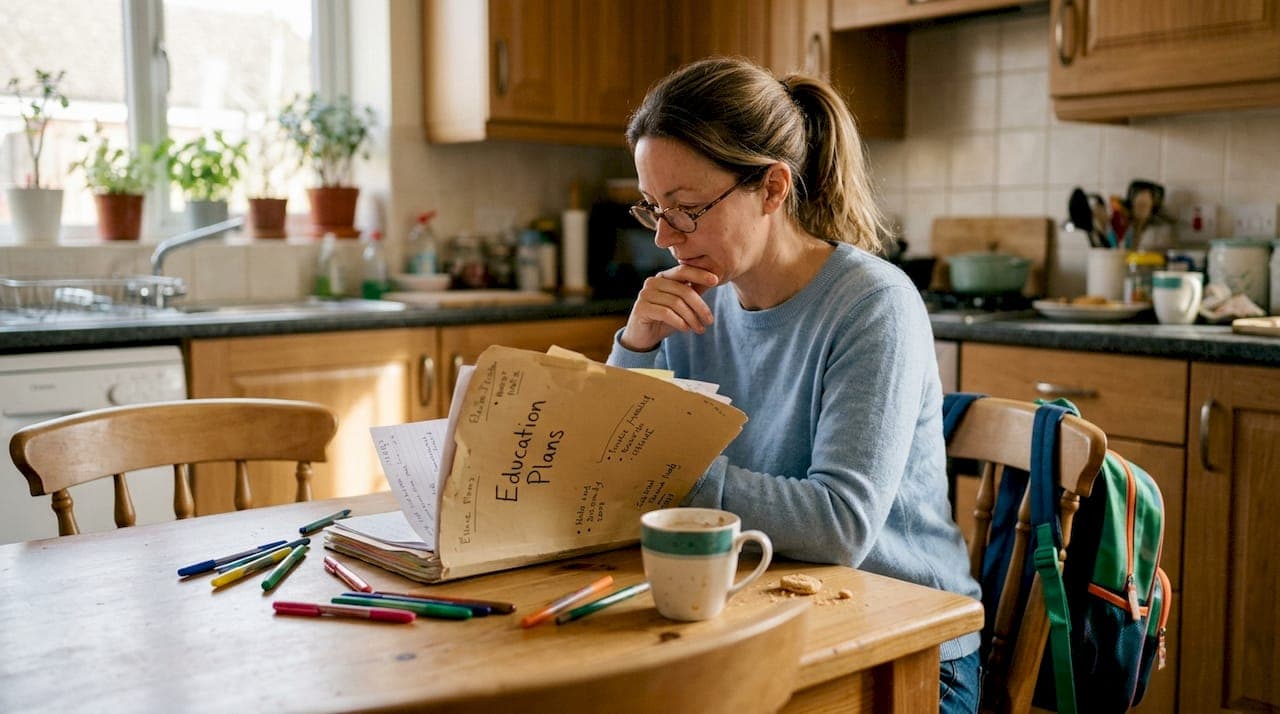
Tracking the learning progress of two, three, or more children at home is no small task. You are the teacher, the planner, and the record keeper, all at once. Add in the possibility of a local authority (LA) check-in, and the pressure can feel real. The good news? With a clear, step-by-step system, you can stay organized, feel confident, and show solid evidence of your children's progress whenever it is needed. This guide walks you through exactly how to do that, from understanding your legal duties to choosing the right tools for your family.
Table of Contents
- Understanding the legal framework and local authority requirements
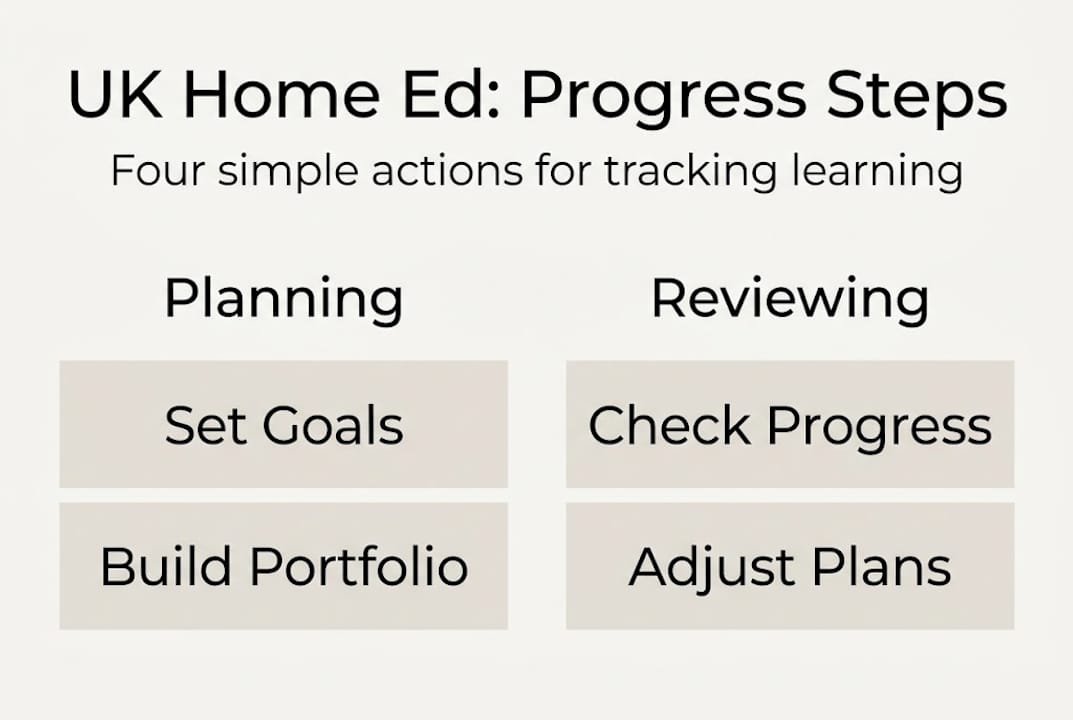
- Step 1: Set clear goals for each child and subject
- Step 2: Organize and maintain learning portfolios
- Step 3: Review progress regularly and adjust plans
- Step 4: Use practical tools, trackers, and apps for multi-child homes
- Our perspective: Stop trying to track everything and start tracking what matters
- Keep your records organized with ProgressNest
- Frequently asked questions
Key Takeaways
| Point | Details |
|---|---|
| Legal requirements first | Understand Section 7 duties and what local authorities expect as evidence of education. |
| Individual portfolios | Maintain a tailored portfolio for each child with dated samples, notes, and regular updates. |
| Routine progress checks | Schedule regular reviews to adjust plans and prepare evidence for authorities. |
| Use helpful tools | Leverage digital trackers or apps to stay organized for multiple children. |
Understanding the legal framework and local authority requirements
Before you build any tracking system, it helps to know what you are actually working toward. In the UK, UK home educators must provide efficient full-time education suitable to each child's age, ability, aptitude, and any special educational needs, under Section 7 of the Education Act 1996. Local authorities can step in if they believe provision is unsuitable.
This does not mean you need to replicate a school. It means you need to show that your children are genuinely learning and making progress. What counts as suitable education is broader than many parents realize.
Here is what local authorities typically look for:
- Evidence of a clear educational philosophy or approach
- Coverage of core subjects like literacy, numeracy, and science
- Samples of your child's work over time
- Notes on activities, outings, and learning experiences
- A sense of future plans and goals for each child
According to BBC Bitesize guidance, demonstrating progress to LAs can be done through written reports, portfolios, or optional meetings. You are not required to sit your children for national tests. What matters is showing breadth, depth, and forward movement.
"The key is not perfection. It is evidence of consistent, thoughtful education tailored to your child."
This is where structured progress monitoring becomes your best friend. When your records are organized and up to date, an LA inquiry feels manageable rather than stressful. You can also review the government guidance on suitable education to understand what your local authority may assess.
Step 1: Set clear goals for each child and subject
With a clear legal understanding, begin by defining what progress will look like for each of your children. This is the foundation everything else builds on.
Every child learns differently. A 7-year-old working on phonics has very different needs from a 12-year-old exploring essay writing. Setting individualized goals helps you teach to each child's actual level, not a one-size-fits-all standard.
A practical approach is to use SMART goals. These are goals that are:
- Specific — Name the exact skill or topic (e.g., "read a 200-word passage independently")
- Measurable — Include a clear way to check progress (e.g., "with fewer than 5 errors")
- Achievable — Realistic for your child's current level
- Relevant — Connected to your educational philosophy and their interests
- Time-bound — Set a clear review date, such as four weeks from now
For example, for a 7-year-old named Mia, a goal might be: "By the end of the month, Mia will read a short story aloud with confidence." For a 12-year-old, it might be: "By half-term, complete two structured essays on history topics of their choice."
"Goals give your teaching direction. Without them, it is easy to stay busy but miss real progress."
As structured steps for homeschooling tracking suggest, setting SMART goals per subject and per child, combined with regular reviews, is one of the most effective methods for demonstrating progress over time.
Pro Tip: Write your goals down and keep them somewhere visible. Review them at the start of each week. This small habit keeps your teaching focused and your records strong. You can find more ideas for goal-setting for home education on the ProgressNest blog.
Step 2: Organize and maintain learning portfolios
Once goals are set, you need a system to gather evidence of your child's progress. A learning portfolio is the most widely accepted and flexible way to do this.
A strong portfolio for each child should include:
- Work samples from core subjects like math, English, and science
- Activity notes describing outings, projects, or experiments
- Photos or videos of hands-on learning
- Your child's own reflections or feedback on what they enjoyed or found hard
- Reading logs or book lists
Portfolios over tests are the main form of evidence most home educators use, and LAs widely accept them. As BBC Bitesize confirms, written portfolios showing progress since last contact are the primary evidence accepted by local authorities.
One of the biggest decisions is whether to go digital or physical. Here is a quick comparison:
| Feature | Digital portfolio | Physical portfolio |
|---|---|---|
| Easy to search | Yes | No |
| Shareable with LA | Yes, instantly | Requires scanning |
| Storage space | Cloud-based | Needs physical space |
| Cost | Low to free | Paper and folders |
| Best for | Multiple children | Single child or young learners |
For families with more than one child, digital portfolios save significant time. You can organize a folder per child, with subfolders by subject and month.
Pro Tip: Set a weekly 15-minute "portfolio slot" to add new work. Little and often keeps it manageable. Explore sample home education timetables for ideas on fitting this into your week. You can also learn more about organizing a learning portfolio with ProgressNest's tracking tools.
Step 3: Review progress regularly and adjust plans
With portfolios in place, build routine processes to stay on track and demonstrate consistent progress. Regular reviews are what turn a pile of work samples into a clear story of learning.
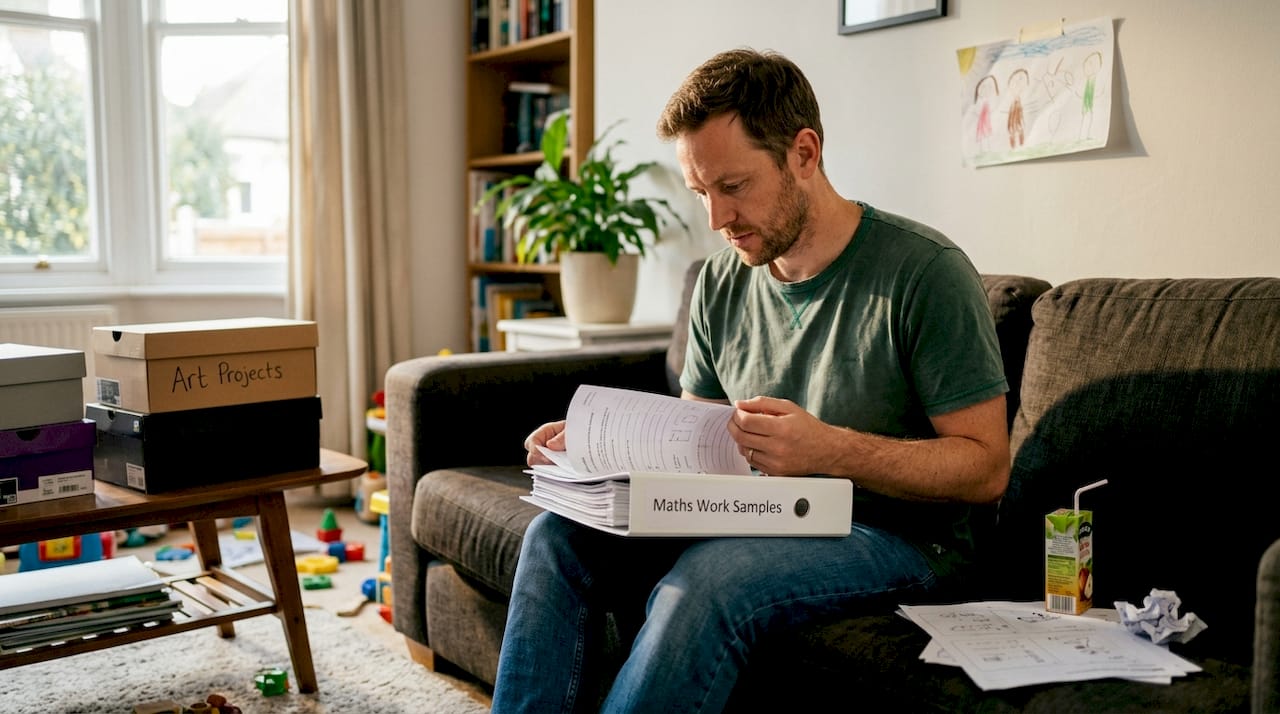
Why does this matter? Because progress is not always visible day to day. A weekly or biweekly review lets you spot gaps early, celebrate wins, and adjust your approach before small issues become bigger ones.
For families with multiple children, staggering reviews by age or subject makes this practical. Here is a sample review schedule:
| Family size | Suggested review frequency | Focus areas |
|---|---|---|
| 1 child | Weekly | All core subjects |
| 2 children | Weekly per child, alternating | Rotate subject focus |
| 3 or more | Biweekly per child | Core subjects plus one elective |
As LA guidance recommends, reviews should be weekly or biweekly, with portfolios updated across core subjects and annual informal LA contact recommended.
Here is a simple review process you can follow:
- Look back at goals set at the start of the period
- Check portfolio entries added since the last review
- Note what went well and what needs more attention
- Update or adjust the plan for the next period
- Add a brief review note to each child's portfolio
Keeping a short written note after each review is powerful. It shows the LA that you are actively monitoring and adapting. Visit the ProgressNest blog for more on building progress review routines, and see how routine progress tracking can keep your family on a steady path.
Step 4: Use practical tools, trackers, and apps for multi-child homes
Managing multiple children can feel chaotic. Specialized tools and trackers simplify the process and help you stay calm and organized.
Spreadsheets can work, but they get messy fast when you have more than one child and multiple subjects to track. Purpose-built tools designed for home educators are a much better fit.
Here are some options worth considering:
- Dedicated apps like ProgressNest that let you manage multiple child profiles, log milestones, and generate reports in one place
- Loop schedules that rotate subjects across the week without rigid daily timetables, reducing the stress of keeping up
- Checklists tied to your SMART goals, so you can quickly see what has been covered and what is outstanding
- Automated reminders to prompt portfolio updates or review sessions
- Visual timelines that show progress at a glance across weeks or months
Multiple children require scalable systems like apps or digital trackers to avoid overwhelm, and flexible loop schedules are particularly effective for home educators juggling different ages and abilities.
Pro Tip: Choose one tool and stick with it for at least a full term before deciding if it works. Switching systems too often creates gaps in your records.
ProgressNest's milestone tracker tools and parent dashboard solutions are built specifically for this. You can also use the child development tracker to monitor progress across different stages, all in one secure place.
Our perspective: Stop trying to track everything and start tracking what matters
Here is something most guides will not tell you. The biggest mistake home educators make is not tracking too little. It is tracking too much.
When you have two or three children at different stages, the instinct is to log every single activity, every book read, every worksheet completed. The result is a mountain of records that takes hours to manage and is nearly impossible to present clearly to an LA.
What actually works is focusing on evidence of progress, not evidence of activity. An LA does not need to see that your child did 40 math worksheets. They need to see that your child moved from struggling with multiplication to solving multi-step problems confidently. That story is told through three or four strong work samples, a short review note, and a clear goal that was met.
Simplify your system. Track goals, capture key samples, write brief review notes. That is it. When your records are lean and purposeful, you feel less stressed, and your evidence is actually stronger. Momentum in home education comes from clarity, not from complexity.
Keep your records organized with ProgressNest
If you are ready to move away from scattered spreadsheets and paper folders, ProgressNest was built for exactly this.
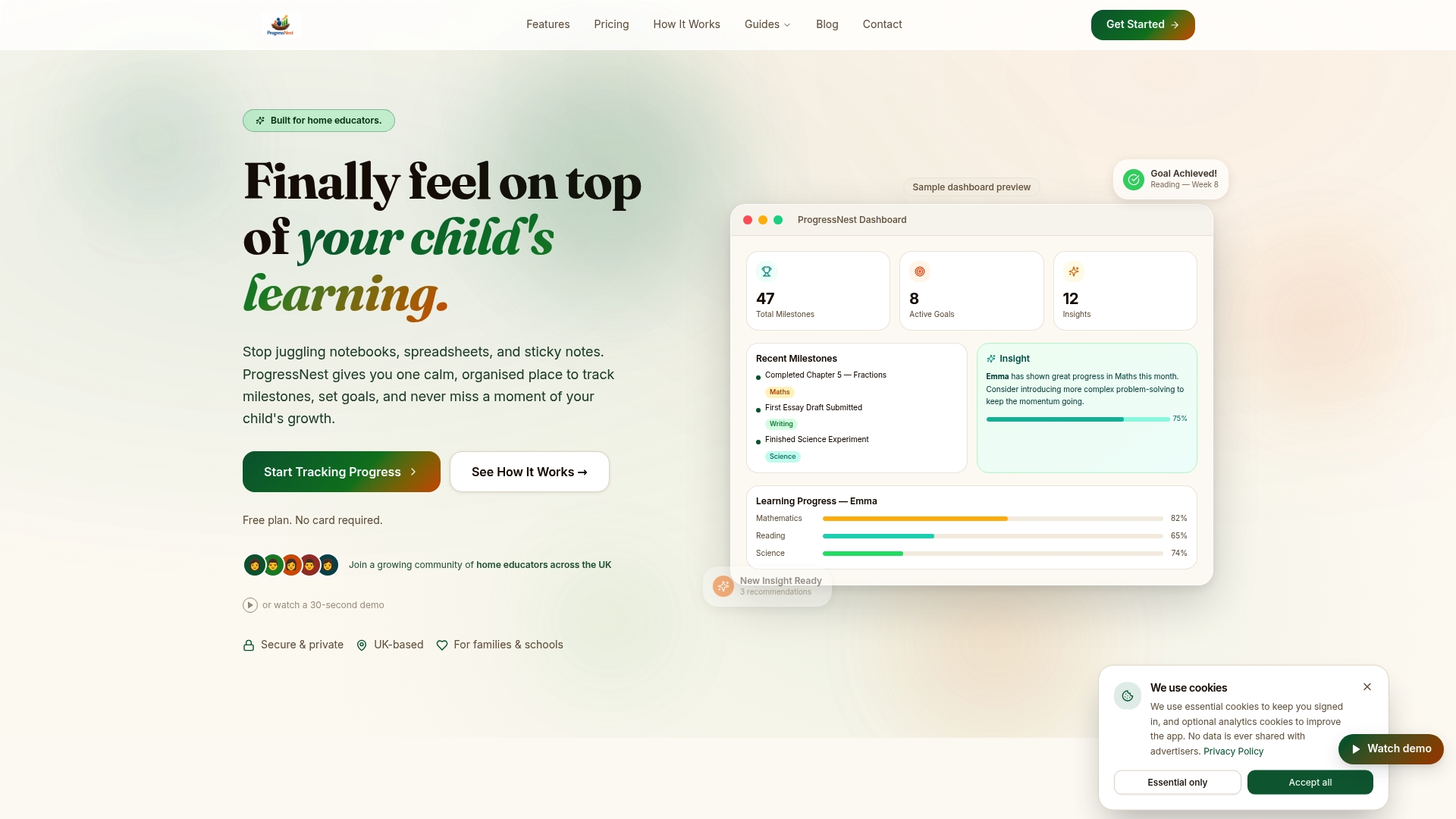
ProgressNest lets you manage multiple children's profiles in one place, set SMART goals, log milestones, and generate professional PDF progress reports that local authorities recognize and respect. You can track across subjects, review trends with visual charts, and get automated reminders so nothing slips through. It is secure, easy to use, and designed specifically for UK home educators. Whether you have one child or five, ProgressNest grows with your family. Start your free trial today and see how much calmer your record-keeping can feel.
Frequently asked questions
Do I need to follow the National Curriculum as a UK home educator?
No, the National Curriculum is only a guide for home educators. You must provide suitable, efficient, and full-time education, but you choose your own approach and resources.
What evidence do local authorities accept as proof of progress?
LAs most commonly accept portfolios and reports showing progress alongside work samples. Annual informal contact is also recommended to maintain a positive relationship with your authority.
How do I track progress for children with special educational needs (SEN)?
Children with SEN need carefully tailored goals and, if they have an Education, Health and Care Plan (EHCP), EHCP reviews are required. Individual plans and detailed evidence are essential to demonstrate suitable provision.
Is standardized testing required for UK home educators?
No. Portfolios are the main evidence most home educators use, and standardized tests are entirely optional. Progress is measured by what your records show, not by formal exam results.
What if my local authority says my education isn't suitable?
You have at least 15 days to provide evidence and respond to concerns. Use that time to strengthen your portfolio, add review notes, and present a clear picture of your child's progress.
Recommended
- How to Track Your Child's Educational Progress at Home | ProgressNest
- Educational Milestone Tracker for Children | ProgressNest — UK Parents & Home Educators
- Blog — Home Education Tips & Child Progress Guides | ProgressNest
- Parent Progress Dashboard | Monitor Your Child's Learning in One Place | ProgressNest