
Learning objectives might sound like something that belongs in a school staff meeting. But for home educators, they're one of the most practical tools you have. Without clear goals, it's easy to feel like you're covering a lot without really knowing if your child is progressing. That uncertainty adds stress. It can shake your confidence. When you set well-structured learning objectives, everything shifts. You know what to teach, what to look for, and how to celebrate real growth. This article walks you through evidence-backed strategies to set objectives that actually work, track progress with ease, and give you calm, organized records when UK authorities come calling.
Table of Contents
- The role of learning objectives in home education
- Benefits: Progress tracking and supporting your child's growth
- Setting effective learning objectives: Templates and practical approaches
- Demonstrating progress for UK authorities: What matters most
- Our perspective: Why objectives transform home education
- Make progress tracking effortless with ProgressNest
- Frequently asked questions
Key Takeaways
| Point | Details |
|---|---|
| Structured learning | Clear objectives provide a roadmap that makes home education more organized and purposeful. |
| Measurable progress | Objectives make your child’s achievements visible and easier to track with practical tools. |
| Compliance made easy | Well-chosen objectives help you show educational progress required by UK authorities. |
| Motivation boost | Tracking goals and milestones empowers children and parents to celebrate learning successes. |
| Adaptable strategies | Templates and trackers enable parents to customize learning plans for different ages and needs. |
The role of learning objectives in home education
A learning objective is simply a clear statement of what your child should know or be able to do after a learning activity. Not a vague ambition like "learn more about history." A real objective sounds like: "By Friday, Emma will be able to name five causes of World War One and explain two of them in her own words." That specificity changes everything.
Many home educators follow a range of home education tips to keep their approach fresh, but objectives are the foundation that holds everything together. They give structure to your days, clarity to your expectations, and benchmarks that help you measure real progress over time.
In the UK context, learning objectives are especially important. Local authorities have the power to request evidence that your child is receiving a suitable education. That means covering the basics of literacy and numeracy, a broad curriculum, and age-appropriate learning. Understanding child development milestones alongside your objectives helps you pitch learning at the right level.
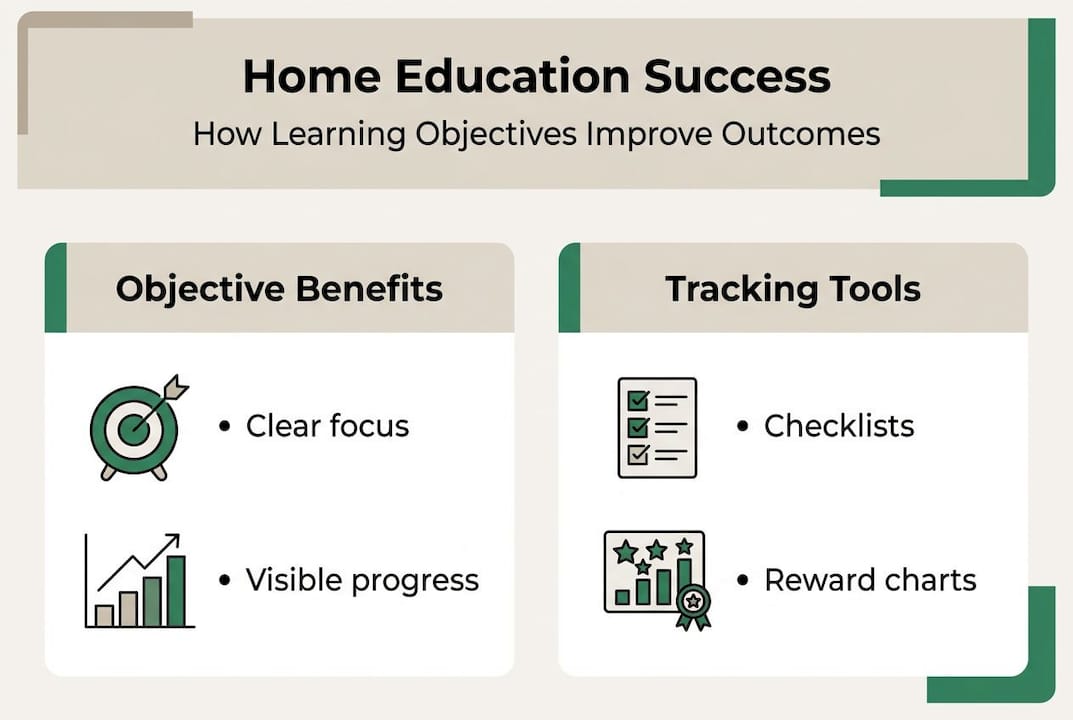
Progress tracking tools like checklists, trackers, reward charts, and SMART goals all enable effective monitoring of your child's learning journey.
"Local authorities expect home educators to demonstrate that their child is receiving a suitable education, including evidence of progress in literacy, numeracy, and a broad curriculum." — Swindon Borough Council suitable education guidance
Here is why learning objectives matter so much for home educators:
- They create structure. You stop guessing what to cover each day.
- They set expectations. Your child knows what success looks like.
- They produce evidence. Met objectives become proof of progress.
- They reduce overwhelm. Breaking learning into goals makes it feel manageable.
- They build momentum. Each completed goal gives your child a confidence boost.
When objectives are tied to real milestones, you move from reactive teaching to intentional education. That shift is calming for you and motivating for your child.
Benefits: Progress tracking and supporting your child's growth
Clear learning objectives make progress visible. Instead of a vague sense that "we covered a lot this week," you have actual checkpoints. Did your child reach the goal or not? That clarity is powerful.
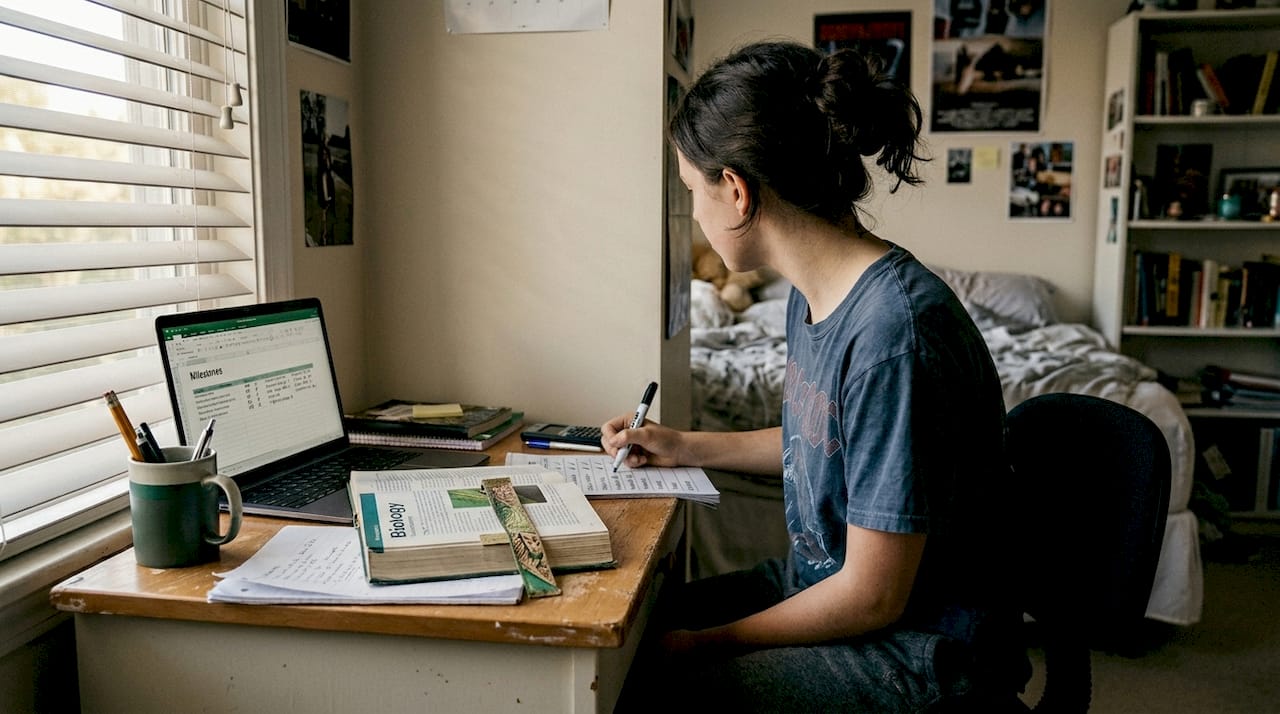
Tracking tools like checklists, reward charts, and digital trackers all connect directly to your objectives. Each tool serves a slightly different purpose depending on your child's age and learning style.
| Tool | Best for | Key benefit |
|---|---|---|
| Checklist | All ages | Simple, quick to review |
| Reward chart | Ages 4 to 10 | Motivating and visual |
| Progress tracker | Ages 8 and up | Shows patterns over time |
| SMART goals | Ages 11 to 16 | Builds self-direction skills |
SMART goals are objectives that are Specific, Measurable, Achievable, Relevant, and Time-bound. For example: "By the end of this month, Jamie will read three chapter books and write a short review of each one." That goal is clear, trackable, and realistic.
Pro Tip: For children under ten, use a colorful visual tracker on the wall. Let them add a sticker or draw a star each time they meet a goal. It turns progress into something they can see and feel proud of.
Effective student progress monitoring does not have to be complicated. Here is a simple process to get started:
- Choose one subject or skill area to focus on first.
- Write one clear objective using the SMART format.
- Select a tracking tool that fits your child's age.
- Check in weekly to note progress and adjust if needed.
- Celebrate each milestone, no matter how small.
- Add a new objective once the current one is met or refined.
This rhythm keeps learning moving forward without adding pressure. It also gives you a natural record of what your child has covered, which becomes very useful when authorities ask for evidence.
Setting effective learning objectives: Templates and practical approaches
Writing a good objective takes practice. The most common mistake is being too vague. "Learn about plants" is not an objective. "By next Wednesday, Sofia will identify five parts of a flowering plant and explain the role of each one" is.
The SMART framework turns a fuzzy idea into a workable plan. Here is how SMART compares to a traditional objective:
| Approach | Example | Is it measurable? | Is there a deadline? |
|---|---|---|---|
| Traditional | Learn about fractions | No | No |
| SMART | Add fractions with like denominators by end of week | Yes | Yes |
For age-appropriate strategies, BBC Bitesize recommends topic checklists and reward charts for younger children, while SMART goals work best for older children aged 11 to 16. Matching the format to the age makes a big difference in buy-in from your child.
Here are some practical templates you can start using today:
- Skill objective: "By [date], [child] will be able to [skill] with [level of support]."
- Knowledge objective: "By [date], [child] will identify/describe/explain [topic] using [resource]."
- Creative objective: "By [date], [child] will produce/create [work] that demonstrates [concept]."
- Reading objective: "By [date], [child] will read [book/text] and summarize the main ideas."
Using a consistent milestone tracker keeps these objectives organized and easy to review. You can also use a tracking child progress system to compare growth across different subjects over time.
Pro Tip: Review your objectives every week, not every term. Children's interests shift. What excited them in September might bore them in November. Weekly check-ins let you adapt quickly while still moving toward bigger goals.
Common pitfalls to avoid:
- Setting too many objectives at once (stick to three to five per subject per half-term)
- Making objectives too hard to measure (vague language leads to vague results)
- Forgetting to involve your child in the process (shared goals get more effort)
- Never revisiting objectives once they are written (they become useless without review)
Demonstrating progress for UK authorities: What matters most
At some point, your local authority (LA) may request a meeting or written evidence of your child's education. This is not something to fear. With clear learning objectives and organized records, you will feel calm and prepared.
UK local authorities expect home educators to show that their child is progressing toward a suitable education. That means evidence of literacy, numeracy, and a broad range of subjects. Objectives that are well-documented become your strongest evidence.
While exact figures vary by council, a significant number of home-educating families in the UK are contacted by their LA at least once a year for a review. Being ready matters.
Documentation types that best illustrate your child's progress:
- Written objectives with dates and outcomes noted
- Samples of work such as written pieces, drawings, or project summaries
- Completed checklists showing skills covered and mastered
- Photos or videos of practical learning activities
- Reading logs and book lists with short reflections
- A narrative summary describing your child's learning journey over the term
Using an educational milestone tracker and a clear parent progress dashboard makes pulling this evidence together straightforward.
"Home education must be suitable to the child's age, ability, and aptitude, including any special educational needs. Local authorities may request written information to assess whether the education being provided is suitable." — Swindon Borough Council suitable education document
Understanding where your child stands relative to child development milestones also helps frame your records in a way that makes sense to reviewers. It shows you are thinking holistically, not just ticking boxes.
Tips for smooth conversations with your local authority:
- Bring organized records, not loose papers
- Use your objectives to narrate your child's learning story
- Stay calm and focused on what your child has achieved
- Show a mix of structured and interest-led learning
- Ask questions and treat it as a two-way conversation
Our perspective: Why objectives transform home education
Most home education guides focus on curriculum choices. Which maths program? Which reading scheme? Those decisions matter, but they are secondary. The real difference between a home education that feels chaotic and one that feels calm comes down to goal clarity.
Here is the truth most guides skip: objectives reduce your stress more than they reduce your child's. When you know what you are aiming for, the noise quiets. You stop second-guessing every lesson. You start trusting the process.
Evidence points to a clear connection between structured objectives and children's self-confidence. When children know what they are working toward and can see themselves getting there, they feel capable. That feeling builds momentum.
Objectives also work best when they are a living document. Not something you write in September and forget until spring. Revisiting them weekly, even briefly, keeps them useful. Better yet, involve your child in setting their own goals. A child who chose their objective is a child who is invested in reaching it.
Pro Tip: Once a week, ask your child "What do you want to get better at this week?" Their answer often surprises you and gives you a ready-made objective.
The families who use structured progress strategies consistently report feeling more organized and less overwhelmed. That is not a coincidence. Clear objectives create a feedback loop of progress, confidence, and calm.
Make progress tracking effortless with ProgressNest
If setting and tracking learning objectives still feels like a lot to manage, ProgressNest is built exactly for this.
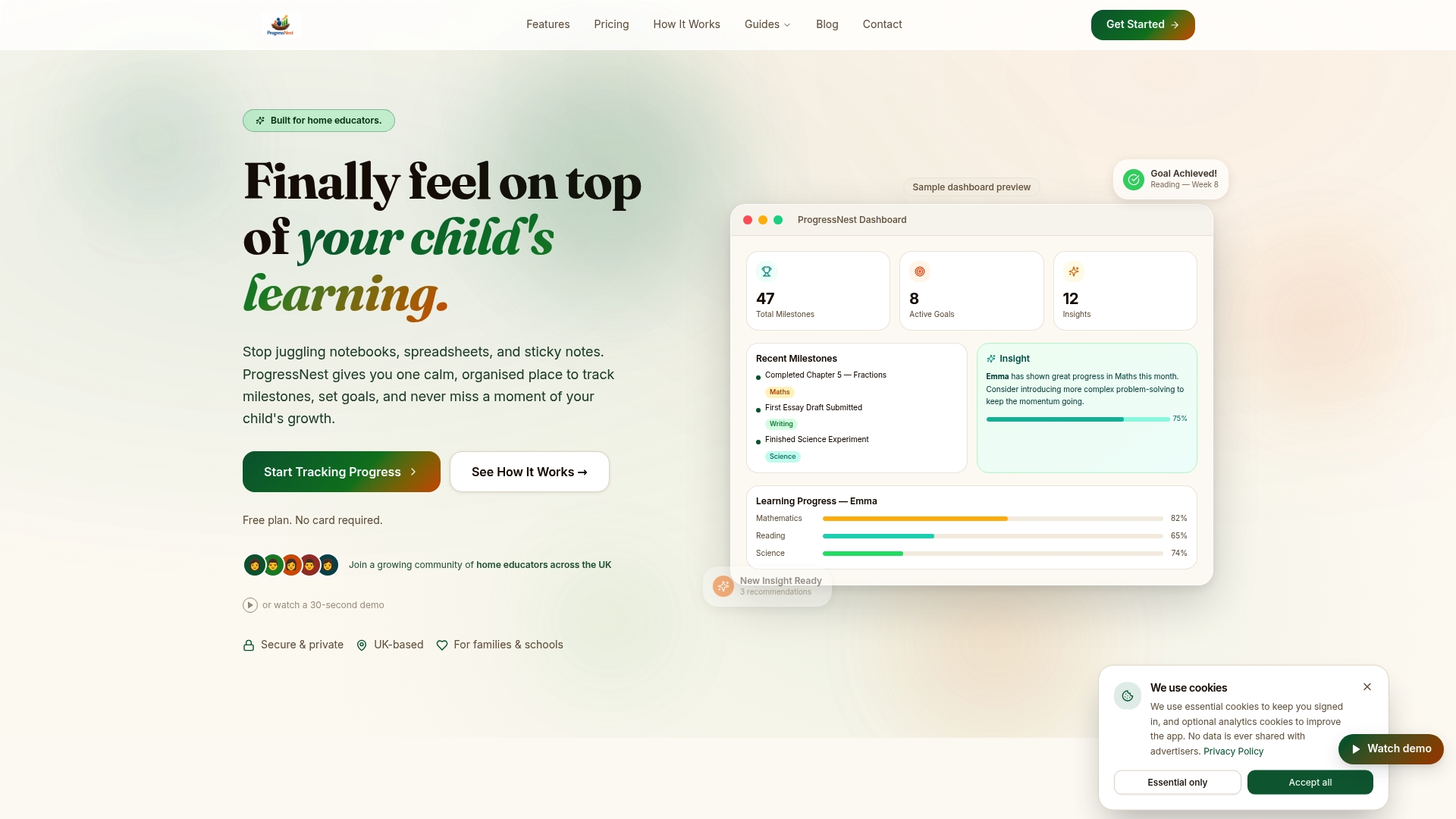
ProgressNest gives UK home educators a simple, secure platform to log milestones, set SMART goals, and generate professional progress reports. You can track multiple children, view visual progress charts, and keep all your records in one organized place. No more spreadsheets. No more lost notes. When your local authority asks for evidence, your milestone tracker and progress dashboard are ready to go. Try ProgressNest today and feel the calm that comes with being organized. 🎯
Frequently asked questions
What are learning objectives in home education?
Learning objectives are clear, structured goals that outline what your child should know or achieve during their home education activities. Progress tracking tools like checklists and SMART goals connect directly to these objectives.
How do learning objectives help with progress tracking?
They make progress measurable, so you can use tools like checklists, trackers, or reward charts to clearly monitor your child's growth over time. Tracking and monitoring tools work best when tied to specific, written objectives.
What evidence do UK authorities expect from home educators?
Local authorities expect records, samples of work, and evidence that your child is progressing with a balanced curriculum, especially in literacy and numeracy. The Swindon suitable education guidance outlines what suitable education looks like in practice.
How do I set effective learning objectives for different ages?
Use topic checklists and reward charts for younger children, and SMART goals for older children aged 11 to 16. Age-appropriate goal formats help match the structure to where your child is developmentally.
Recommended
- 7 Things Every Home Educating Parent Wishes They'd Known Sooner | ProgressNest Blog
- Blog — Home Education Tips & Child Progress Guides | ProgressNest
- How to Track Your Child's Educational Progress at Home | ProgressNest
- Child Learning Tracker | ProgressNest Dashboard
- Lesson Planning - EBC TEFL courses