
Managing learning records for two, three, or even four children at once is genuinely hard. You want to do right by your kids, but the rules feel murky, the paperwork piles up, and every local authority (LA) seems to expect something different. You are not alone in feeling this way. This article walks you through exactly what UK law requires, how to build a reporting system that fits your family, and which digital tools make the whole process calmer and more organized. By the end, you will have a clear plan, not just good intentions.
Table of Contents
- Understand your reporting obligations as a home educator
- Choose your reporting strategy: Individual vs. family portfolios
- Use digital tools and apps to streamline reporting
- Build positive LA relationships with strategic reporting
- Our perspective: The real secret to stress-free reporting
- Streamline your reporting with ProgressNest tools
- Frequently asked questions
Key Takeaways
| Point | Details |
|---|---|
| Know legal boundaries | UK law sets no routine reporting requirement, but you must provide evidence if asked by your local authority. |
| Choose the right portfolio | Select a reporting style—individual, family, or hybrid—that fits your children’s needs and organizational style. |
| Embrace digital tools | Apps and trackers can save time and quickly generate LA-friendly reports, especially for families with multiple children. |
| Balance rights with openness | Proactive, well-organized reporting fosters positive LA relations while protecting privacy and autonomy. |
Understand your reporting obligations as a home educator
Before diving into specific tools and examples, it is crucial to clarify exactly what reporting is expected of you as a UK home educator.
The foundation of home education law in England is Section 7 of the Education Act 1996. It says parents must provide "suitable full-time education" for their children, but it does not define a fixed curriculum, require lesson plans, or demand regular reports. There is no legal requirement for routine reporting or record-keeping unless your LA contacts you directly.
When an LA does reach out, it is usually because a concern has been raised, not as a standard annual check. At that point, you need to show evidence of suitable education. Importantly, LAs cannot demand visits or testing; written reports are preferred and fully sufficient in most cases.
Reporting rules also vary across the UK. England gives families the most flexibility. Wales has a duty to notify your LA when you begin home educating. Scotland requires registration with your local council. Northern Ireland has its own notification requirements. Always check the statutory guidance for LAs relevant to your region, and browse UK reporting guidance for plain-language summaries.
Common reporting myths, clarified:
- Myth: You must follow the National Curriculum. Fact: You do not. Education just needs to be "suitable" for your child's age, ability, and any special needs.
- Myth: Your LA can visit your home at any time. Fact: You can decline a home visit and offer a written report instead.
- Myth: You must report every year. Fact: No routine annual report is required. Respond when asked.
- Myth: You need a qualified teacher to oversee learning. Fact: Parents are fully entitled to educate their children without teaching qualifications.
- Myth: LAs can demand standardized test results. Fact: They cannot. Evidence of learning is enough.
Understanding these boundaries removes a huge amount of anxiety. You are in a stronger position than many families realize.
Choose your reporting strategy: Individual vs. family portfolios
Knowing your obligations, the next step is to decide how you will collect and organize proof of learning for each child.
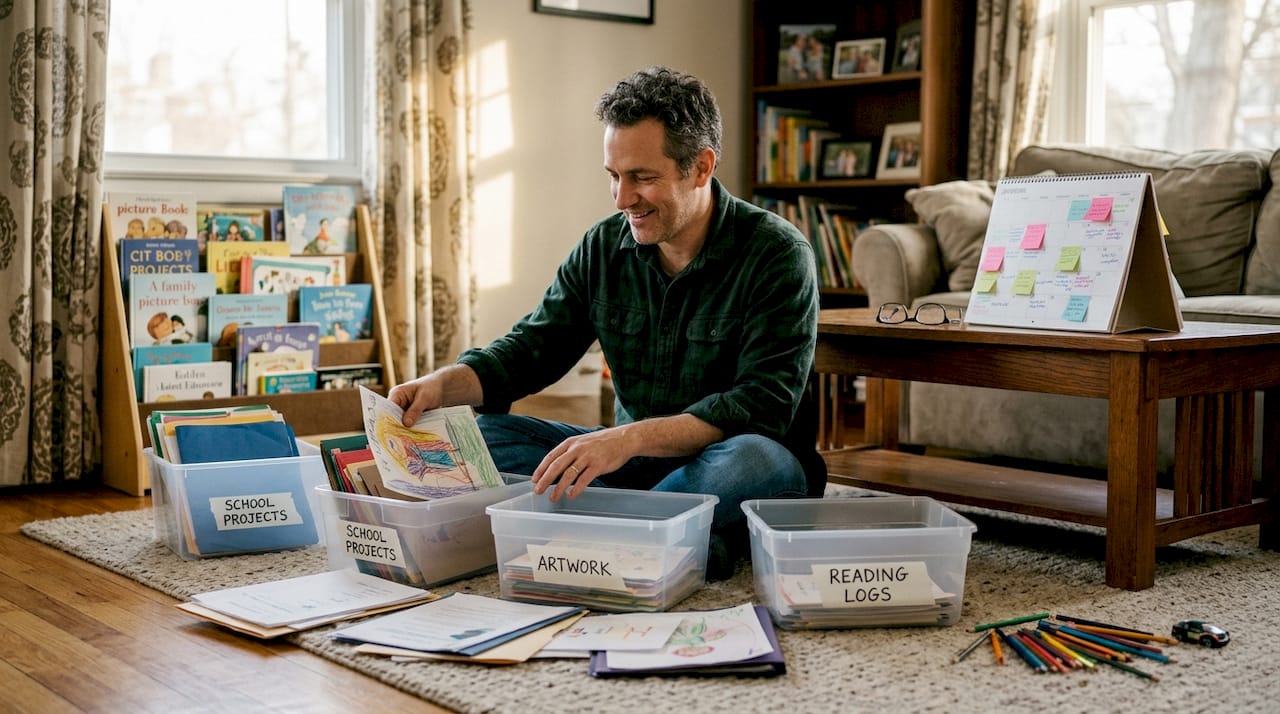
There are three main approaches: individual portfolios, family portfolios, and hybrid models.
An individual portfolio keeps each child's work completely separate. It is detailed, easy to present to an LA, and shows clear personal progress. The downside is that it takes more time to maintain when you have several children.
A family portfolio groups shared activities together, such as a nature walk or a history project that all the kids joined. It is more efficient but can blur individual contributions if you are not careful.
A hybrid model combines both. Shared evidence goes into a family folder, while each child also has their own section showing personal milestones and independent work. For portfolio tracking strategies that work across multiple children, this tends to be the most practical choice.
| Portfolio type | Simplicity | Depth of detail | Flexibility | LA acceptance |
|---|---|---|---|---|
| Individual | Medium | High | Medium | Very high |
| Family | High | Low to medium | High | Medium |
| Hybrid | Medium | High | Very high | High |
Choosing the right model depends on your family's rhythm and your LA's tendencies. Some LAs are happy with a brief written summary. Others appreciate seeing subject-specific evidence. For tips on portfolios that match different LA expectations, it helps to ask other local home educators what has worked for them.
Digital tools make portfolio organization much easier. Apps like Collage and Strew allow you to track work chronologically by subject or National Curriculum area, which is useful when building individual records for multiple children.
Pro Tip: When siblings share a project, add the joint evidence to both individual portfolios and write one sentence explaining each child's specific role. This takes 30 seconds and makes your report far clearer to any reader.
Use digital tools and apps to streamline reporting
Once you have selected your portfolio strategy, digital solutions can dramatically reduce your reporting workload.
Apps like Collage and Strew generate PDF reports, allow uploading of photos and videos, and organize work by subject or National Curriculum area. This means you can capture a science experiment with a quick photo and tag it in seconds, rather than writing it up later from memory.
Here is how to set up a digital record for multiple children:
- Create a separate profile for each child. Label them clearly with name and age group.
- Set up subject or topic tags. Use broad categories like literacy, numeracy, creative arts, and outdoor learning.
- Log evidence daily or weekly. Photos, videos, written notes, and scanned worksheets all count.
- Review monthly. Spend 15 minutes at the end of each month checking that each child has balanced coverage across subjects.
- Generate a PDF report when needed. Most apps let you export a clean, professional summary in one click.
- Share securely with your LA. Email the PDF directly or use a shared link with password protection.
| Method | Setup time | Ease of use | LA-ready export | Cost |
|---|---|---|---|---|
| Paper folders | Low | Medium | Manual only | Very low |
| Collage app | Low | High | Yes, PDF | Free/paid tier |
| Strew app | Low | High | Yes, PDF | Subscription |
| ProgressNest | Low | Very high | Yes, PDF | Subscription |
Moving from paper to digital does not need to be overwhelming. Start by digitizing just one month of records. Once you see how much time you save, the rest follows naturally. Use digital tracking tools that let you manage all your children from a single dashboard, and explore app-based reporting features that turn daily logs into polished reports automatically.
Build positive LA relationships with strategic reporting
A sound digital or portfolio system makes compliance easier. Now let us look at how reporting style affects real-life interactions with authorities.
Sending a voluntary annual summary to your LA, even when not required, builds goodwill. It shows you are organized and confident, which tends to reduce scrutiny. However, you do not need to share everything. Keep reports focused and factual.
Under 2026 rules, if an LA issues a School Attendance Order and you do not respond within 15 days, escalation becomes automatic. Proactive voluntary reporting significantly reduces the chance of reaching that stage.
The EHE statistics show that elective home education numbers in England have grown sharply in recent years, which means LAs are managing larger caseloads. A clear, well-organized report makes their job easier and yours safer.
Examples of positive vs. negative LA interactions:
- Positive: Sending a one-page summary with a few work samples when first contacted. The LA closes the case quickly.
- Positive: Responding promptly and calmly to any inquiry, offering a written report rather than a home visit.
- Negative: Ignoring LA letters, which triggers escalation under the 2026 15-day rule.
- Negative: Sharing excessive detail that raises more questions than it answers.
For families with children who have special educational needs, it is worth using your reporting system to document SEN support clearly. Note any therapies, adaptations, or specialist resources used. This protects you and supports your child if they ever return to school or move regions.
The Education Otherwise guidance recommends balancing a rights-focused approach with a practical one. Know your rights, but also recognize that a brief, positive report often resolves LA contact faster than a formal refusal.
Pro Tip: Keep a simple email template saved on your phone. When an LA contacts you, reply within a few days with a polite note confirming you are home educating and will provide a written summary within two weeks. This buys you time and signals cooperation.
Our perspective: The real secret to stress-free reporting
With a reporting strategy and digital toolkit in place, it is worth reconsidering what genuinely works long-term for your family.
Here is the uncomfortable truth: most home educators over-document. They spend hours creating beautiful portfolios that go far beyond what any LA actually needs. That time could go toward actual learning.
The real secret is consistency over perfection. A short weekly log, kept faithfully for 12 months, is far more convincing than a rushed 40-page portfolio assembled the night before an LA visit. LAs are looking for evidence that learning is happening regularly, not proof that you are a professional curriculum designer.
Anxiety often comes from comparing your records to what other families share online. But those polished examples are the highlight reel, not the daily reality. Drop the pressure to make everything look impressive.
Focus on genuine learning evidence: a photo of your child building a model, a paragraph they wrote, a book they finished. That is what matters. The reporting advice from veteran parents consistently points to one thing: a warm, honest, and regular record beats an elaborate one every time.
Streamline your reporting with ProgressNest tools
If you are ready to spend less time on admin and more on learning adventures, here is how ProgressNest can help.
ProgressNest was built specifically for families like yours. You can create individual profiles for each child, log milestones as they happen, and generate professional PDF reports in minutes. No spreadsheets, no scrambling before an LA contact.
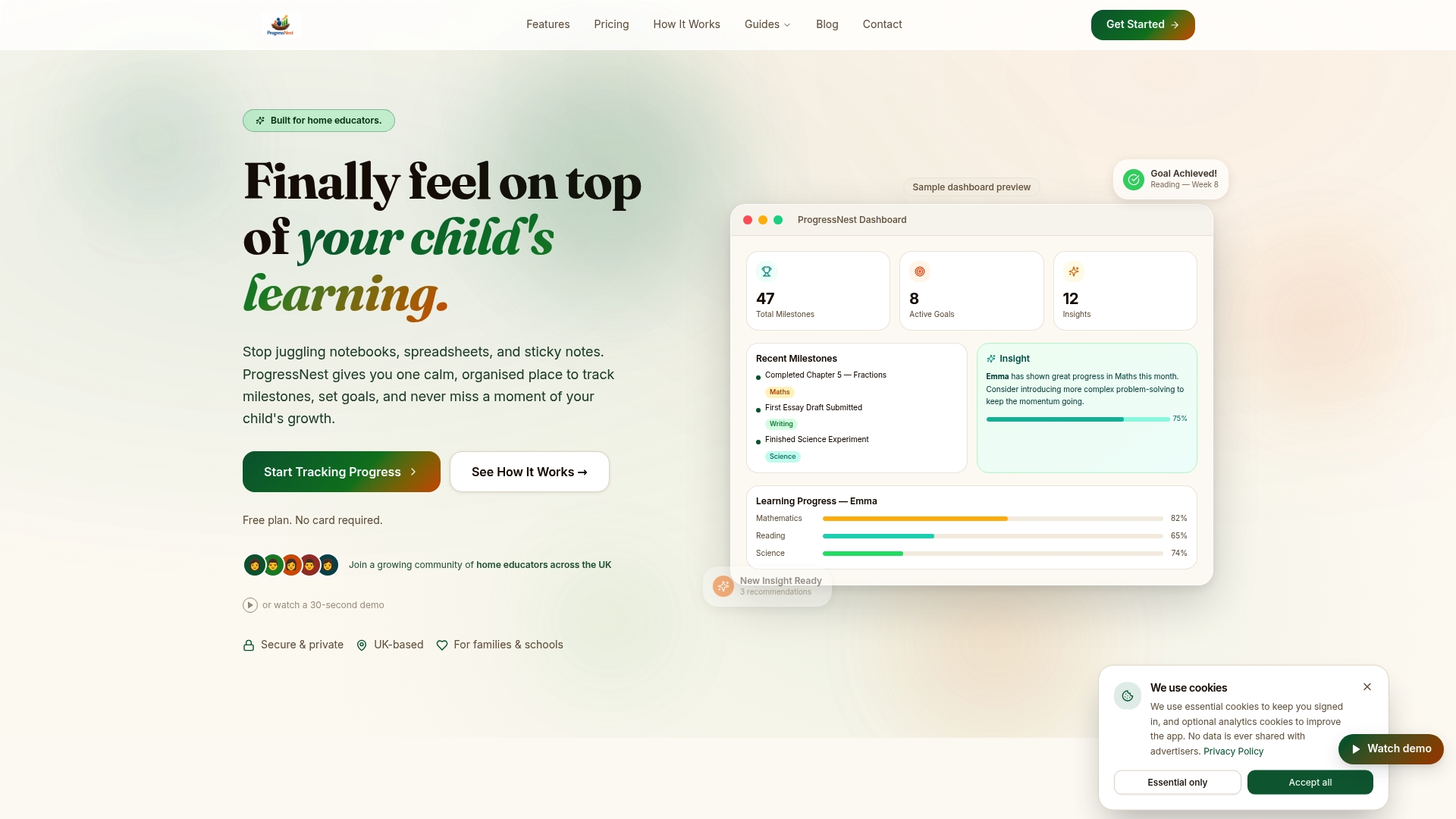
The Educational Milestone Tracker lets you tag evidence by subject and child, so your records stay organized even on busy days. The Parent Progress Dashboard gives you a calm, clear view of how each child is progressing across all areas of learning. Start your free trial today and feel the difference that organized, secure tracking makes.
Frequently asked questions
Do UK home educators have to submit reports every year?
No. There is no legal requirement for routine annual reports, but you must respond if your local authority requests evidence of suitable education.
What should I include in a home education portfolio?
Include samples of work, photos, project summaries, outings, and a brief description of each child's progress. Digital tools make it easy to include photos, videos, and daily learning notes in one place.
Can my local authority demand standard tests or lesson plans?
No. LAs cannot require standardized tests, lesson plans, or a specific curriculum. They can only ask for evidence that your child is receiving a suitable education.
How do reporting requirements differ across UK countries?
England, Wales, Scotland, and Northern Ireland each have different rules around notification and registration, so always check the guidance specific to where you live.
Recommended
- How to Track Your Child's Educational Progress at Home | ProgressNest
- Educational Milestone Tracker for Children | ProgressNest — UK Parents & Home Educators
- Child Learning Tracker | ProgressNest Dashboard
- Parent Progress Dashboard | Monitor Your Child's Learning in One Place | ProgressNest
- Upskill with CPD for practising English teachers